Will AI Replace QA Engineers?
Over the past year, the conversation around QA engineers has sounded increasingly familiar: AI can already write test cases, detect bugs, and will soon make software testers obsolete.
We decided to look at what is actually happening in the European job market and what employers are really looking for.
We decided to look at what is actually happening in the European job market and what employers are really looking for.
There are no ready-made statistics that answer this question. Eurostat publishes job vacancy rates only for broad sectors such as “Information and Communication,” without breaking them down by profession. National statistical offices generally do the same. No one systematically tracks the number of QA vacancies across Europe. So we decided to count them manually.
For this analysis, we selected and reviewed 67 current vacancies for QA Engineer, Software Tester, and QA Automation Engineer positions across seven European countries: Estonia, Latvia, Lithuania, Finland, the Netherlands, Sweden, and Germany.
At the same time, we looked at how demand for QA professionals has changed over the past several years.
The short answer: we found no evidence that AI is replacing QA engineers on a large scale.
What we analyzed
In August 2026, we collected and reviewed 67 vacancies from cv.ee, CV Keskus, LinkedIn, and company career pages — ranging from Bolt and Bigbank to Spotify and SAP.
For each vacancy, we checked whether AI, ChatGPT, LLMs, Copilot, or prompt engineering were mentioned as required or preferred skills.
We excluded positions that contained “QA” in the title but were not directly related to software testing, such as manufacturing quality assurance, compliance QA, regulatory QA in healthcare companies, and similar roles.
For each vacancy, we checked whether AI, ChatGPT, LLMs, Copilot, or prompt engineering were mentioned as required or preferred skills.
We excluded positions that contained “QA” in the title but were not directly related to software testing, such as manufacturing quality assurance, compliance QA, regulatory QA in healthcare companies, and similar roles.
What we found
To make the results easier to compare, we summarized the findings by country, showing how many QA vacancies we reviewed, how often AI-related skills were mentioned, and what share of the analyzed postings this represented.
In Estonia, not one of the nine postings we reviewed — Bolt, Bigbank, Pipedrive, Sisu Tech, EvoGame, Playtech, Plummy Games, Cybernetica and others — asked for AI skills.
Instead, the same familiar requirements appeared again and again: manual testing, Playwright, Cypress or Selenium, API testing, CI/CD, product understanding, and the ability to work effectively with a team.
The situation was similar in the Netherlands, Sweden, Latvia, and Lithuania. AI does appear in job descriptions, but so far only occasionally.
Among the vacancies mentioning AI, only four actually required these skills from candidates. In the remaining cases, AI experience was simply considered an additional advantage.
The situation was similar in the Netherlands, Sweden, Latvia, and Lithuania. AI does appear in job descriptions, but so far only occasionally.
Among the vacancies mentioning AI, only four actually required these skills from candidates. In the remaining cases, AI experience was simply considered an additional advantage.
What Happens in Roles Where AI Is Actually Required?
Even these vacancies do not fit particularly well into the narrative that “AI is replacing testers.”
For example, Ubiquiti in Latvia is simultaneously hiring a traditional Manual QA Engineer, working with tools such as TestRail and Zephyr, and a separate AI-Driven QA Engineer expected to work with Claude and Codex.
For example, Ubiquiti in Latvia is simultaneously hiring a traditional Manual QA Engineer, working with tools such as TestRail and Zephyr, and a separate AI-Driven QA Engineer expected to work with Claude and Codex.
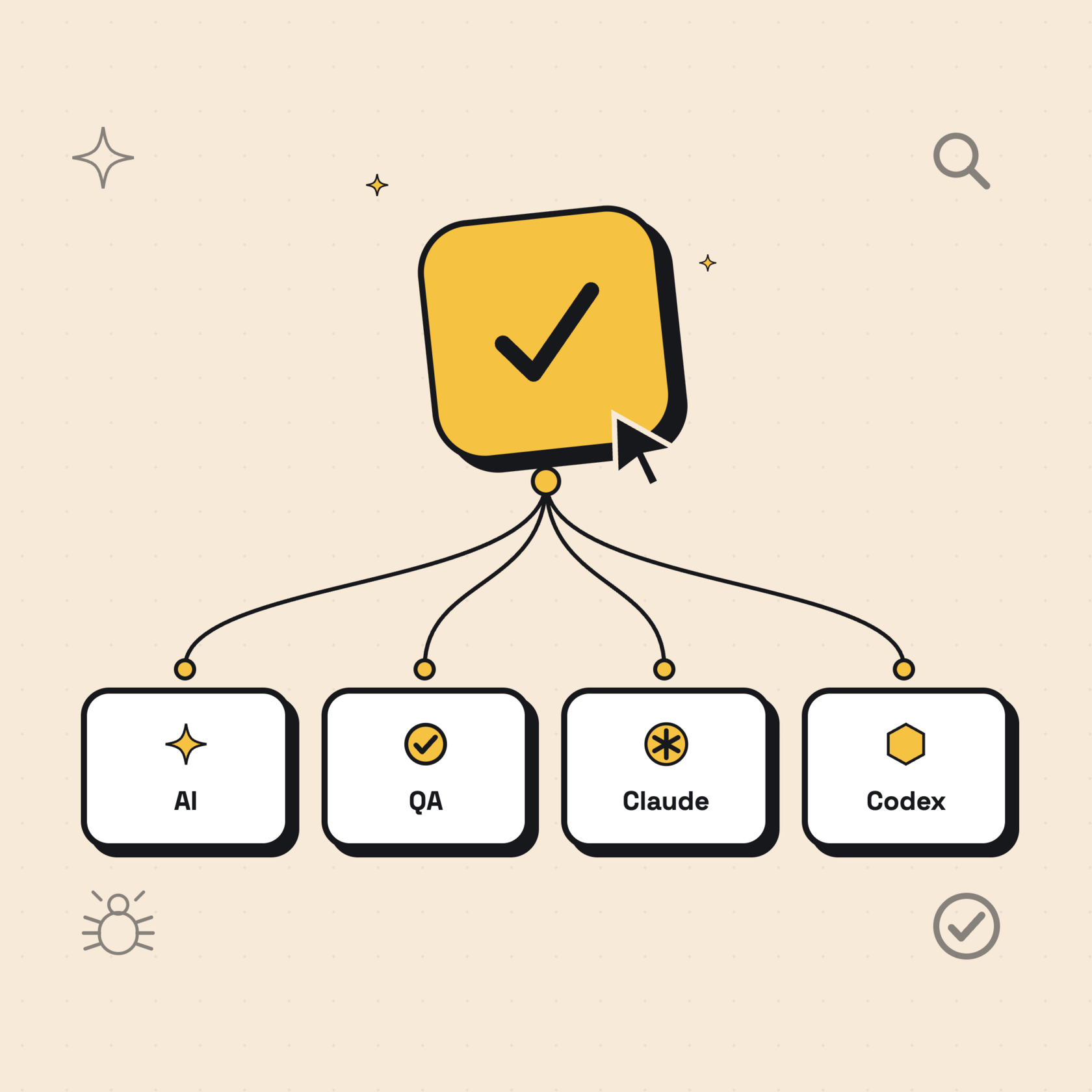
In other words, the AI-focused role appeared alongside a traditional QA position rather than replacing it.
The situation at Sana Labs in Sweden is even more interesting. The company develops AI products and LLM agents, so it needs testers who can evaluate these systems — identify problems, deal with unpredictable model responses, hallucinations, and unstable behavior.
The situation at Sana Labs in Sweden is even more interesting. The company develops AI products and LLM agents, so it needs testers who can evaluate these systems — identify problems, deal with unpredictable model responses, hallucinations, and unstable behavior.
The more AI products appear, the more demand there is for people who can test them.
In Lithuania, AI appeared in only one vacancy — at Moody’s. The role expected candidates to have experience with Copilot Studio and generating test cases using LLMs.
A similar pattern can be seen in research by InterviewStack.io, which analyzed 17,000 US job postings. Positions explicitly requiring AI or LLM skills offered a median salary of approximately $119,300, compared with $80,000 for other roles — a difference of around 49%.
However, only 4.4% of the vacancies required such skills. For now, AI appears to be more of a valuable, highly paid additional skill than a new mandatory entry requirement for QA professionals.
But What If the Number of QA Jobs Is Simply Falling?
That is a different question. If we look at the broader labor market, there have indeed been periods of decline.
Europe-wide statistics show the same trend. According to Eurostat, the job vacancy rate in the euro area increased for two consecutive years after the pandemic downturn — by 0.6 percentage points in both 2021 and 2022 — and then declined for three years: by 0.2 percentage points in 2023, 0.4 in 2024, and 0.3 in 2025.
In other words, the entire labor market was cooling — not just IT, and certainly not software testing alone.
This period also coincided with a broader correction in the technology sector following the aggressive hiring of the pandemic years: mass layoffs, higher interest rates, and hiring freezes.
More recently, however, the trend has started to change. Between February 2025 and May 2026, the number of IT vacancies increased by approximately 15%, while the overall number of vacancies across the labor market declined by around 7% during the same period.
Employers are increasingly looking for professionals who can do more than perform isolated tasks: they want people who understand the system as a whole and know how to use new tools effectively.
A similar trend can be seen in the United Kingdom. According to IT Jobs Watch, the number of permanent vacancies with QA Engineer in the job title increased from 202 in 2024 to 339 in 2026 — an increase of approximately 68%.
At the same time, companies are increasingly reluctant to hire someone exclusively for manual testing.
Instead of traditional Software Tester positions, we see more roles such as QA Automation Engineer, SDET, Software Engineer in Test, and other hybrid positions combining testing with automation and engineering skills.
Europe-wide statistics show the same trend. According to Eurostat, the job vacancy rate in the euro area increased for two consecutive years after the pandemic downturn — by 0.6 percentage points in both 2021 and 2022 — and then declined for three years: by 0.2 percentage points in 2023, 0.4 in 2024, and 0.3 in 2025.
In other words, the entire labor market was cooling — not just IT, and certainly not software testing alone.
This period also coincided with a broader correction in the technology sector following the aggressive hiring of the pandemic years: mass layoffs, higher interest rates, and hiring freezes.
More recently, however, the trend has started to change. Between February 2025 and May 2026, the number of IT vacancies increased by approximately 15%, while the overall number of vacancies across the labor market declined by around 7% during the same period.
Employers are increasingly looking for professionals who can do more than perform isolated tasks: they want people who understand the system as a whole and know how to use new tools effectively.
A similar trend can be seen in the United Kingdom. According to IT Jobs Watch, the number of permanent vacancies with QA Engineer in the job title increased from 202 in 2024 to 339 in 2026 — an increase of approximately 68%.
At the same time, companies are increasingly reluctant to hire someone exclusively for manual testing.
Instead of traditional Software Tester positions, we see more roles such as QA Automation Engineer, SDET, Software Engineer in Test, and other hybrid positions combining testing with automation and engineering skills.
So, Will AI Replace QA Engineers?
Based on this sample, the answer is no. In 53 out of 67 vacancies, AI was not mentioned at all, and AI-related skills were a mandatory requirement in only four.
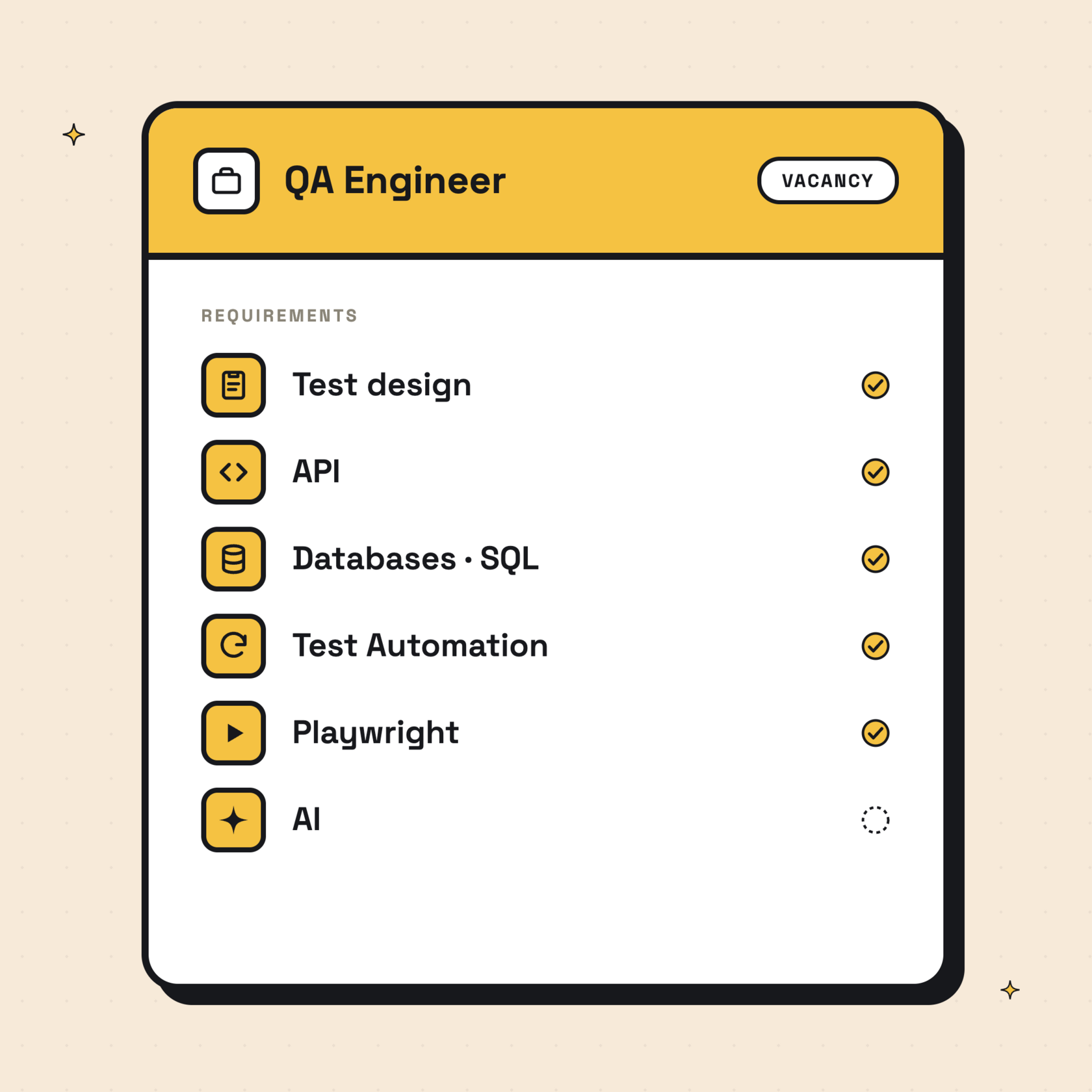
Employers are still primarily looking for automation skills, API testing, CI/CD knowledge, and product understanding — essentially the same core skill set they were looking for three years ago.
However, the profession itself is changing, and it is changing faster than job descriptions may suggest.
Employers are still primarily looking for automation skills, API testing, CI/CD knowledge, and product understanding — essentially the same core skill set they were looking for three years ago.
However, the profession itself is changing, and it is changing faster than job descriptions may suggest.
The number of positions focused exclusively on manual testing is decreasing. But manual testing itself has not disappeared — and it is not going anywhere.
What does this mean for someone entering QA today?
QA is still a viable career path. Vacancies exist, and in Estonia companies such as Bolt, Bigbank, Pipedrive, Playtech, and others continue to hire QA professionals.
However, entering the profession the same way people did five years ago — with only a manual testing course and an ISTQB certificate — is becoming increasingly difficult.
The entry bar has risen. Today, a strong starting skill set looks more like:
However, entering the profession the same way people did five years ago — with only a manual testing course and an ISTQB certificate — is becoming increasingly difficult.
The entry bar has risen. Today, a strong starting skill set looks more like:
Testing + Automation + the ability to work with AI tools. And importantly, in that order. Automation is something employers already ask for today. Playwright appears in 40.8% of UK QA Automation Engineer vacancies, while CI-related skills appear in 49%.
AI is more likely to become the next requirement. It is still mentioned in only around 14–20% of vacancies, but managers surveyed in the World Quality Report already rank AI among the most important skills QA professionals will need in the future.
So the real risk today is not that ChatGPT or Claude will take a tester’s job.
The real risk is entering the job market with only half of the skills employers expect — and competing against candidates who have the full set.
AI is more likely to become the next requirement. It is still mentioned in only around 14–20% of vacancies, but managers surveyed in the World Quality Report already rank AI among the most important skills QA professionals will need in the future.
So the real risk today is not that ChatGPT or Claude will take a tester’s job.
The real risk is entering the job market with only half of the skills employers expect — and competing against candidates who have the full set.
AI is not eliminating QA. It is becoming another tool within the profession.